Wednesday Word: Kuidaore

Feb. 18th, 2026 09:30 am
calzephyr: MLP Words (MLP Words)
[personal profile] calzephyr posting in [community profile] 1word1day
Kuidaore

Here's a word I can get behind--kuidaore or 食い倒れ. It describes indulging in eating food to the point where one risks physical or financial ruin. It's not the same as gluttony--more like the passionate enjoyment of food and the joy it brings. I have to trust the Internet on this one, but kuidaore means "eat until you fall" :-)

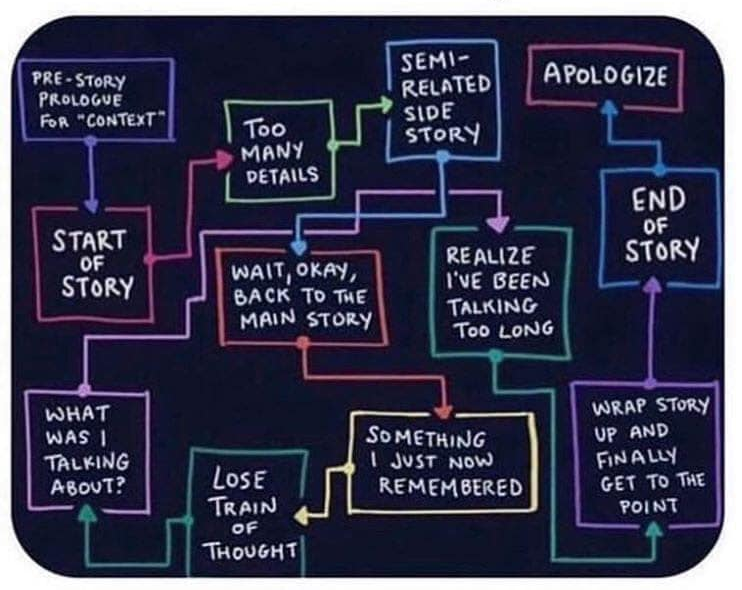
17 ways to start a story

Feb. 18th, 2026 09:49 am
mount_oregano: Let me see (judgemental)
[personal profile] mount_oregano

At the Capricon science fiction convention earlier this month, I led a writing workshop.

“It’s A Start: A Workshop On Your First Paragraph — A good opening paragraph for a story or novel will carry the work to success. In this workshop, we will consider seventeen different ways to start a work of fiction, explore how each one will affect the reader, and evaluate the promise it sets for the story.”

Opening paragraphs are hard to write because so much rides on them. They should evoke the tone, voice, setting, genre, characters, stakes, conflict, trajectory, intrigue, point of view, grab attention, make readers feel they’re in skillful hands, and be interesting for the reader — or some of this, at least. Different kinds of opening paragraphs let you focus on the elements that matter to the story you want to tell.

Seventeen is a somewhat arbitrary number, but these openings offer a clue to the breadth of possibilities available. You could start with something unexpected, an image, action, simplicity, questions, curiosity, quotes, a frame, dialogue, emotion, captivation, philosophy, change, the protagonist, setting, a prologue, or flash-forward.

You can download a PDF here that explains each one and offers a couple of examples. Happy writing!


flibbertigibbet

Feb. 18th, 2026 07:40 am
prettygoodword: text: words are sexy (Default)
[personal profile] prettygoodword
flibbertigibbet (FLIB-er-tee-jib-it) - n., a silly, scatterbrained, or garrulous person.


Typically used only for women. This dates to Middle English flepergebet, meaning gossip, and got an extended meaning as an imp or minor devil from Shakespeare's use in King Lear. Origin unclear but suspected of being imitative of gossiping.

---L.
duskpeterson: The lowercased letters D and P, joined together (Default)
[personal profile] duskpeterson

The Emorian Palace

Entrance to the palace

Do not be offended if you are denied entrance to the Emorian palace. The fact that you have come far enough to be denied that entrance shows that the Emorians' trust in you is high indeed.

The strong manner in which Emor protects its ruler, the Chara, is not evidence that the Chara is weak and frightened. Rather, it is a simple fact that being Chara is the most dangerous job in the Three Lands. Fully four-fifths of the Charas have died before their time, many from assassination. Few Charas live beyond the age of thirty.

(I should explain to any mainlanders who are puzzled at this point that noble peninsulareans have been known to live as long as one hundred years. Even commoner peninsularans often live till they are fifty. If you meet a thirty-year-old, he is not an elder; by peninsularean standards, thirty years old is barely out of one's youth)

Under these circumstances, it is only natural that the Emorians should seek to protect their Chara, giving him the opportunity to live at least long enough to father an heir. By Emorian law, the Chara may not leave his palace, except in wartime. The number of visitors who are allowed past the outer wall of the palace grounds is small. The number of visitors who are allowed past the inner wall of the palace grounds is even smaller. The number of visitors who are allowed inside the palace is very small indeed. And the number of visitors who are allowed inside the East Wing of the palace, where the Chara lives, can be counted without losing your breath.

In practice, this means that the only people who see the Chara are his council, officials from the palace and army, boys who are training to be palace officials, royal messengers, the palace guards, and honored guests, such as ambassadors.

And the servants. Everyone forgets the servants. If you want to see the Chara, I suggest entering into training for high service.


[Translator's note: The perils of living as a Chara can be seen in Empty Dagger Hand.]

[syndicated profile] theatlantic_health_feed

Posted by Christie Aschwanden

Olympic skimo is a spectacle. Appearing at the Games for the first time, skimo, short for ski mountaineering, grew from a long tradition of scaling mountains on skis—sometimes for hours on end—for the reward of gliding down, preferably through untracked powder. But at the Olympics, it will involve sprints of approximately three and a half minutes. First, athletes ascend a steep slope on skis outfitted with special fabric strips called “skins,” which prevent them from sliding backwards down the hill. Then they throw their skis on their back and hike in ski boots, put their skis back on for a final ascent, and finally peel off their skins to race downhill.

The events will include a mixed-gender skimo relay—“contrived for the Olympic field,” Sarah Cookler, the head of sport for USA Skimo, the sport’s American governing body, told me. Each team will include one man and one woman, each of whom will run the course twice. Anna Gibson and Cam Smith, both making their Olympic debuts, will represent Team USA.

It’s only fitting that such a new sport should debut on the world stage with a format that’s newly popular. Mixed-gender events, in which each team consists of a set number of men and women, have long had a place at the Olympics: Mixed-pairs figure skating and tennis were each introduced to the Games more than a century ago. But recently, such events have been growing in number as part of a deliberate effort to bring more attention to women’s sports. At Milan Cortina, every major sport category but ice hockey features mixed-gender events.

Women participated in the first Winter Olympics, in Chamonix in 1924, but only in figure skating. Women’s speed-skating exhibitions were included in the 1932 Olympics, but no medals were awarded. In 1936, women competed in alpine skiing, but they weren’t allowed in cross-country until 1952. Since then, the Winter Olympics have slowly been approaching a sort of parity, with women participating in an ever-growing number of events once considered too difficult, dangerous, or scandalous for them.

The International Olympic Committee is advertising the 2026 Games as “the most gender-balanced Olympic Winter Games in history.” That’s based on the fact that women will represent 47 percent of athletes participating and compete in 53 percent of all events; this Olympics is also the first where male and female cross-country skiers are competing at the same distances. But in terms of viewership and publicity, the many mixed-gender events may do more to raise the profile of female athletes than women’s events alone.

Women’s sports, including skimo, tend to attract far fewer spectators than men’s sports do. The mixed-gender relay can help bridge this gap, Smith told me, because in events that feature both men and women, viewers are positioned to watch everyone compete. And if the mixed-gender events allow spectators to get to know more female athletes, that could translate into more people watching the women’s stand-alone events. The IOC is leaning into these events: The Los Angeles Games in 2028 will feature 25 mixed-gender events, including new ones in golf, rowing, and artistic gymnastics.

Gibson told me she’s grown accustomed to elite sport spaces separating men and women as much as possible in the name of equity. She’s also a world-class trail runner and accomplished gravel-bike racer, and in those sports, “the talk has been all about giving women their own start in order to elevate women’s competition rather than having women be buried in the men’s field,” she said. Separate men’s and women’s fields have long been the default in most sports, and for good reason: If women had to compete directly with men, they would rarely have a chance to win. But bringing women and men together in competitions that include both gives women their own space and attention while including all the sport’s athletes within one community. It creates “a lot of camaraderie,” Gibson said, and in her experience, adds to the excitement among spectators.

Women, of course, face many obstacles in sport that cannot be solved by the addition of a few mixed-gender Olympic events. Across sports, male athletes are generally paid more than their female counterparts. In skimo, prize money is equal at the sport’s World Cup, but some other races still have unequal payouts, Cookler said. (Gibson said she avoids those.) Women athletes are still sometimes subjected to sexual harassment and abuse, even on the Olympic level. The Winter Olympics still include one event in which women are not allowed to compete at all—Nordic combined, which consists of ski jumping and cross-country skiing. (The IOC is already considering dropping Nordic combined altogether because of low participation and spectator interest; an IOC spokesperson told me the event “will undergo a full evaluation” following this year’s Olympics, and reiterated the committee’s commitment to gender equality.)

And mixed-gender formats can still be subject to unequal dynamics. Biathlon, a Winter Olympics event that combines cross-country skiing and target shooting, has used the mixed-gender relay format since the 2014 Olympics in Sochi. (Biathlon and luge were the first sports to introduce a mixed-gender format to the Winter Games since figure skating and ice dancing in the 20th century.) But “women always went first in our mixed-gender relays, and people felt it was unfair that a woman could never be the anchor,” Joanne Reid, a three-time Olympian who competed for Team USA last week, told me. In 2019, the sport’s governing body restructured the order of the competition so that the gender of the anchor rotates.

Even as mixed-gender events become more common, skimo’s inclusion in future Olympics is not assured. It’s in the 2026 Olympics because the organizers of this year’s Games proposed it; to continue competing, skimo athletes will need organizers at the next venues to propose its inclusion too. Skimo enthusiasts expect this to happen and hope future Olympics will include events that are longer and more representative of the sport’s origins. “Nobody got into skimo to do the sprint relay,” Smith said. But as he began training for the event, he enjoyed it more than he expected. “It’s really fun because we are accountable to each other,” he said. “I’m racing all out because I know that she’s doing the same for me.”

rachelmanija: (Books: old)
[personal profile] rachelmanija


Excellent dark fantasy about three women trapped in a medieval castle under siege. It reminded me a bit of Tanith Lee - it's very lush and decadent in parts - and a bit of The Everlasting. Fantastic female characters with really interesting relationships. The language is not strictly medieval-accurate but a lot of the characters' mindsets are, which is fun.

All I knew going in was that it was medieval, female-centric, and involved cannibalism. This gave me a completely wrong impression, which was that it was a sort of female-centric medieval Lord of the Flies in which everyone turns on each other under pressure and starts killing and eating each other. This is very nearly the opposite of what it's actually about, though there is some survival-oriented eating of the already-dead.

The three main characters are Phosyne, an ex-nun and mad alchemist with some very unusual pets that even she has no idea what they are; Ser Voyne, a female knight whose rigid loyalty gets tested to hell and back; and Treila, a noblewoman fallen on hard times and desperate to escape. The three of them have deliciously complicated relationships with each other, fully of shifting boundaries, loyalties, trust, sexuality, and love.

At the start, everyone is absolutely desperate. They've been trapped in the castle under siege for six months, the last food will run out in two weeks, and help does not seem to be on the way. Treila is catching rats and plotting her escape via a secret tunnel, but some mysterious connection to Ser Voyne is keeping her from making a break for it. Phosyne has previously enacted a "miracle" to purify the water, and the king is pressuring her to miraculously produce food; unfortunately, she has no idea how she did the first miracle, let alone how to conjure food out of nothing. Ser Voyne, who wants to charge out and fight, has been assigned to stand over Phosyne and make her do a miracle.

And then everything changes.

The setting is a somewhat alternate medieval Europe; it's hard to tell exactly how alternate because we're very tightly in the POV of the three main characters, and we only know what they're directly observing or thinking about. The religion we see focuses on the Constant Lady and her saints. She might be some version of the Virgin Mary, but though the language around her is Christian-derived, there doesn't seem to be a Jesus analogue. The nuns (no priests are ever mentioned) keep bees and give a kind of Communion with honey. Some of them are alchemists and engineers. There is a female knight who is treated differently than the male knights by the king and there's only one of her, but it's not clear whether this is specific to their relationship or whether women are usually not allowed to be knights or whether they are allowed but it's unusual.

This level of uncertainty about the background doesn't feel like the author didn't bother to think it out, but rather adds to the overall themes of the book, which heavily focus on how different people experience/perceive things differently. It also adds to the claustrophobic feeling: everyone is trapped in a very small space and additionally limited by what they can perceive. The magic in the book does have some level of rules, but is generally not well understood or beyond human comprehension. There's a pervasive sense of living in a world that isn't or cannot be understood, but which can only be survived by achieving some level of comprehension.

And that's all you should know before you start. The actual premise doesn't happen until about a fourth of the way into the book, and while it's spoiled in all descriptions I didn't know it and really enjoyed finding out.

Spoilers for the premise. Read more... )

Spoilers for later in the book: Read more... )

Probably the last third could have been trimmed a bit, but overall this book is fantastic. I was impressed enough that I bought all of Starling's other books for my shop. I previously only had The Luminous Dead, which I'm reading now.

Content notes: Cannibalism. Physical injury/mutilation. Mind control. A dubcon kiss. Extremely vivid descriptions of the physical sensations of hunger and starvation. Phosyne's pets do NOT die!

Feel free to put spoilers for the whole book in comments.

Tuesday word: Ebullient

Feb. 17th, 2026 10:20 am
simplyn2deep: (Hawaii Five 0::team::red cup)
[personal profile] simplyn2deep posting in [community profile] 1word1day
February 17, 2026

Ebullient (adjective)
ebullient [ih-buhl-yuhnt, ih-bool-]


adjective
1. overflowing with fervor, enthusiasm, or excitement; high-spirited: The award winner was in an ebullient mood at the dinner in her honor.
2. bubbling up like a boiling liquid: ebullient lava streaming down the mountainside.

Other Word Forms
ebullience noun
ebulliently adverb
nonebullient adjective
nonebulliently adverb
unebullient adjective

Related Words
agitated, brash, buoyant, chipper, effervescent, effusive, elated, exuberant, irrepressible

See more synonyms on Thesaurus.com

Origin: First recorded in 1590–1600; from Latin ēbullient- (stem of ēbulliēns “boiling up,” present participle of ēbullīre ), equivalent to ē- + bulli- (derivative of bulla “a bubble”) + -ent-; e- , boil ( def. ), -ent

Example Sentences
During a streamed interview in November with Zeta CEO David Steinberg, Ives sounded ebullient about Zeta’s prospects and said the company was “almost like a step ahead” of an offering from Salesforce.
From Barron's

After a night of jubilation in Dakar, the morning newspapers were ebullient: "Heroic!"
From Barron's

Aside from a mournful clarinet line in the first part of its third and final movement, the work had a surprisingly ebullient spirt for something composed by a Dane in 1944.
From The Wall Street Journal

Examining your current holdings, you might find that ebullient stock markets last year expanded your share of equities to 70%.
From The Wall Street Journal

Some investors were hoping for a more ebullient end to 2025, pinning their hopes on a holiday-season market phenomenon that lifts share prices in the days surrounding Christmas and New Year’s Day.
From The Wall Street Journal

Star Trek Thoughts - Part 6

Feb. 17th, 2026 09:42 am
chris_gerrib: (Default)
[personal profile] chris_gerrib
I am continuing my ongoing (semi-) rewatch of Star Trek: The Original Series. This post will cover season 2, episodes 6 to 9.

Technical: I think the remastered version uses the same shuttle bay footage that the CGI-ed for "Galileo Seven" in season 1.

Story: This batch is wildly uneven! Episode 6, "The Doomsday Machine" is truly a masterpiece and holds up well today. Then the following episode, "Catspaw" which aired a mere 7 days later is truly shitty. (They tried to make a Halloween-themed Star Trek which originally aired on October 27. They failed.)

The next two episodes, "I, Mudd" and "Metamorphosis" are both breathtakingly sexist to a modern viewer. As a story, "I, Mudd" works, largely because Harcourt Fenton "Harry" Mudd is written as a sexist scoundrel, even by the standards of the time. "Metamorphosis" kind of doesn't. For those not remembering, this is the episode where we meet Zefram Cochrane. It's also where the sole female character, Assistant Commissioner Nancy Hedford, goes gaga over ole' Zef and his alien flying jellyfish.

Fandom frequently mourns the early cancellation of The Original Series. I think we forget sometimes how uneven the various episodes were.

rumgumption

Feb. 17th, 2026 07:28 am
prettygoodword: text: words are sexy (Default)
[personal profile] prettygoodword
rumgumption (rum-GUMP-shuhn) or rumblergumption (rum-buhl-GUMP-shuhn) - (Scot. & N. Eng.) n., shrewdness, good sense, intelligence.


Somewhat dated, possibly enough that I should mark it as arch. Related term: rumgumptious, which means shrewd but also headstrong or forward in manner, so a bit of semantic drift there. Gumption, meaning good sense and boldness, is also related, as the root, but what the prefix means no one seems to know -- possibly it's just an intensifier?

---L.
rachelmanija: (Books: old)
[personal profile] rachelmanija


Five high school friends go on a camping trip and find a mysterious staircase in the woods. One of them climbs it and vanishes. Twenty years later, the staircase reappears, and they go to face it again.

I loved this premise and the cover. The staircase leading nowhere is spooky and beautiful, a weird melding of nature and civilization, so I was hoping for something that matched that vibe, like Annihilation or Revelator.

That was absolutely not what I got. The Staicase in the Woods is the misbegotten mutant child of It, King Sorrow, and Tumblr-speak. Every single character is insufferable. The teenagers are boring, and the adults are all the worst people you meet at parties. There are four men and one woman/nonbinary person, and she/they reads exactly like what MAGA thinks liberal women/trans people are like -- AuHD, blue hair, Tumblr-speak, angry, preachy, kinky sex etc. She/they says "My pronouns are she/them," then is only ever referred to as she and a woman. The staircase itself is barely in the story, where it leads is a letdown, and the ending combines the worst elements of being dumb and unresolved.

I got partway in and then skimmed because I was curious about the staircase and the vanished kid.

Angry spoilers for the whole book.

Read more... )
larryhammer: floral print origami penguin, facing left (Default)
[personal profile] larryhammer
For Poetry Monday:

Tired, Langston Hughes

I am so tired of waiting.
Aren’t you,
For the world to become good
And beautiful and kind?
Let us take a knife
And cut the world in two—
And see what worms are eating
At the rind.


---L.

Subject quote from Vuelvo al Sur, Astor Piazzolla & Fernando Solanas, though I confess I prefer the Gotan Project cover.

cucurbitologist

Feb. 16th, 2026 08:08 am
prettygoodword: text: words are sexy (Default)
[personal profile] prettygoodword
Theme week! I have some fun polysyllabic ones near each other on my list, so I've grouped them together for some sesquipedalian fun.


cucurbitologist (kyoo-kur-bi-TOL-oh-jist) - n., someone who studies or cultivates Cucurbitaceae.


That is to say, members of the family that includes gourds, melons, squash, pumpkins, and cucumbers. Ye pumpkin farmer is a cucurbitologist. Coined from Latin cucurbita, gourd -- which is not a complete stretch, as cucurbit meaning gourd (and the gourd-shaped portion of an alembic) dates back to Middle English, from Anglo-Norman, from Old French.

The word came to my attention from someone describing Linus Van Pelt from Peanuts as a cryptocucurbitologist.

---L.

Monday Word: Ergotism

Feb. 16th, 2026 06:35 am
stonepicnicking_okapi: letters (letters)
[personal profile] stonepicnicking_okapi posting in [community profile] 1word1day
ergotism [ur-guh-tiz-uhm]

noun

a condition caused by eating rye or some other grain that is infected with ergot fungus or by taking an overdose of a medicine containing ergot, characterized by cramps, spasms, and a form of gangrene. Also called: Saint Anthony's fire.

examples

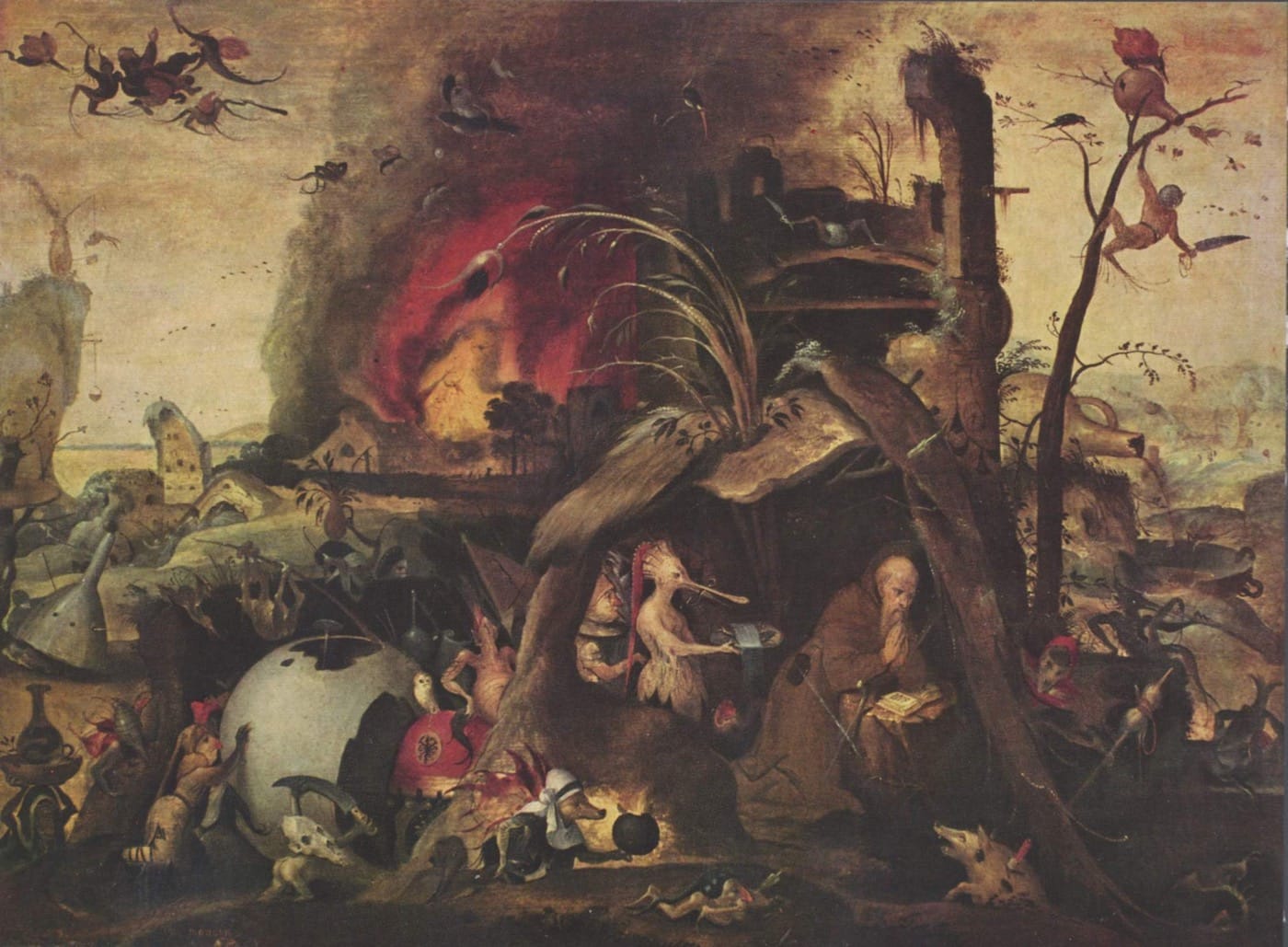
1. Looking at depictions of St. Anthony in the paintings of Renaissance masters, the influence of the disease of ergotism on the history of art starts to become clear. "How Renaissance Painting Smoldered with a Little Known Hallucinogen." Forrest Muelrath. 15 Sept 2017

2. Experts now know that those symptoms are common among people with convulsive ergotism, or ergot poisoning, which is caused by a fungus that can grow on wheat, rye, and other similar grains. Sarah Klein, Health.com, 2 Oct 2017

origins
borrowed from French ergotisme, from ergot ergot + -isme -ism

ergot comes from "spur on a rooster, a similar growth on another bird or mammal, fungal sclerotium resembling a rooster's spur," earlier also argot, going back to Old French argoz (subject case) "spur of a bird or animal," derivative from a Gallo-Romance base *arg- "spine, spiny or thorny plant," probably from a pre-Latin substratal language

Jan Mandijn, “The Temptation of Saint Anthony” (circa 1550)
The Temptation of St. Anthony

3 Good Things

Feb. 15th, 2026 08:51 pm
jjhunter: Watercolor sketch of self-satisfied corvid winking with flaming phoenix feather in its beak (corvid with phoenix feather)
[personal profile] jjhunter
1. The snow has stayed on the ground here long enough that we're finally Acquiring Some Sleds in anticipation of going sledding with friends next weekend. It is so wonderful to have a winter feel like winter again.

2. Hosted a neat new-to-me game yesterday with some close friends and a potential new friend I met through my Awesome Neighbor friend. We all had a great time! We immediately rolled right into plotting More Fun Like This Soon. It's good to be exercising my making-new-friends muscles again.

2a. The game being Molly House, with its gripping shifts between personal queer joy, community delight, and pressuring fears (constables, rogues, and gossip all threatening to trigger police raids of the central molly houses),I would be fascinated to play it again... )

3. I am looking forward to some quiet time at home tomorrow, I say, also having ambitions of Bake & Roast All The Things, do my taxes so I can get my solar panel credits reimbursed (yay, solar!), and maybe get some extra time in at the local studio before my pottery class starts.

Bonus: This being the cold hard dark slog time of year, it helps to have something joyous to move to. I went and looked up what all the musicians I last bought music from (mostly 5+ years ago) have put out in the last few years since, and bought the latest album of each. So far I'm particularly enjoying Wu Fei & Abigail Washburn's debut collaboration merging American old-time music and Chinese folksong, and the latest from MEUTE.

Have you been listening to anything particularly good lately? What is bringing you joy, defiant or otherwise?

Sunday Word: Arcana

Feb. 15th, 2026 10:03 pm
sallymn: (words 3)
[personal profile] sallymn posting in [community profile] 1word1day

arcana [ahr-key-nuh]

noun:
mysterious or specialized knowledge, language, or information accessible or possessed only by the initiate

Examples:

What became clear is that even publishers, agents, and retailers, who’ve rightly been focused on signing writers and selling books, didn’t appreciate how much the arcana of the business would matter in the move to digital platforms. (Tim Carmody, Why Metadata Matters for the Future of E-Books, WIRED, August 2010)

His novels move with kinetic energy, his plots are intricate puzzles shrouded in religious iconography, ancient cryptography and other obscure arcana. (Marc Weingarten, 'The Da Vinci Code' stunned the world. Now Dan Brown releases his most ambitious book yet, Los Angeles Times, September 2025)

And beyond all else he glimpsed an infinite gulf of sheer darkness, where solid and semi-solid forms were known only by their windy stirrings, and cloudy patterns of force seemed to superimpose order on chaos and hold forth a key to all the paradoxes and arcana of the worlds we know. (H P Lovecraft, 'The Haunter of the Dark')

We are the subjects, and so is everything around us, of all manner of subtle and inexplicable influences: and if our ancestors attached too much importance to these ill-understood arcana of the night-side of nature, we have attached too little. (Catherine Crowe, The Night Side of Nature)

"Under the impression," said Mr Micawber, "that your peregrinations in this metropolis have not as yet been extensive, and that you might have some difficulty in penetrating the arcana of the Modern Babylon in the direction of the City Road, - in short," said Mr Micawber, in another burst of confidence, "that you might lose yourself - I shall be happy to call this evening, and install you in the knowledge of the nearest way." (Charles Dickens, David Copperfield)

Indeed, it is to be feared that some of the more rustic and bashful youths of Devil's Ford, who had felt it incumbent upon them to pay their respects to the new-comers, were more at ease in this vestibule than in the arcana beyond, whose glories they could see through the open door. (Bret Harte, Devil's Ford)

Origin:
'hidden things, mysteries,' 1590s, a direct adoption of the Latin plural of arcanum 'a secret, a mystery,' an important word in alchemy, from neuter of adjective arcanus 'secret, hidden, private, concealed' (see arcane). It was occasionally mistaken for a singular and pluralized as arcanas, because arcana is far more common than arcanum. (Online Etymology Dictionary)

February 2026

S M T W T F S
123 4 567
891011121314
151617 18192021
22232425262728

Style Credit

Expand Cut Tags

No cut tags
Page generated Feb. 19th, 2026 04:03 am
Powered by Dreamwidth Studios