mount_oregano: portrait by Badassity (Default)
The Emotional Craft of Fiction: How to Write the Story Beneath the SurfaceThe Emotional Craft of Fiction: How to Write the Story Beneath the Surface by Donald Maass

My rating: 5 of 5 stars


I came to writing fiction after years of just-the-facts journalism, so infusing my writing with emotion remains a challenge. That’s why I found this book helpful. In the first chapter, Donald Maass challenges writers to ask themselves: “How can I get readers to go on emotional journeys of their own?”

Perhaps because he reads a lot for his job as a literary agent, he has opinions about the direction of emotional journey, too. “The ultimate in emotional craft is nothing more than trusting your own feelings. Having faith. Confidence.” But not all feelings, he says. “You can sense when fiction is masking cynicism or anger.... Cynical writing tries too hard.”

Instead, he suggests that readers are seeking an emotional experience, and they want to come away feeling positive rather than crushed, uplifted rather than disappointed, authentic rather than desperate. “How do you get your best self on the page? Let’s look at some practical ways.”

He offers plenty of examples and questions to ask yourself about characters, scenes, themes, stakes, and plot. I learned a lot, and I recommend this book to other writers.


View all my reviews

mount_oregano: portrait by Badassity (Default)

Originally published in 2010 when I lived in Madrid, Spain. The photo is of an eight maravedí coin from 1607, during the reign of King Felipe III, minted in Segovia.

***

What did Miguel de Cervantes earn from Don Quixote de la Mancha? We don’t know, but we have enough clues to try to guess. Cervantes was poor before it was published and poor after it was published, so it wasn’t a huge amount of money. Everyone agrees on that.

A little background

Don Quixote de la Mancha was published in two parts, the first in 1605 and the second in 1615. Cervantes didn’t plan on a second part, but after another author wrote a continuation, he decided to write his own.

In 1604, Cervantes was 50 years old and living in Valladolid. He had written a short story about Don Quixote, and he presented the idea of a novelization to publisher Francisco de Robles, who agreed and urged Cervantes to get it ready fast. Then the book was hastily edited (which explains the many errors in the text), printed on cheap paper with worn type, and rushed to the market.

Probably no one considered it a universal masterpiece, but the first edition of 1,000 copies sold well — in fact, it was immediately pirated in Lisbon. Cervantes had already won notice as a playwright, and this book, which satirized popular novels of chivalry and contemporary society, cemented his reputation as a major writer (at age 50, which was old at the time).

He had received a 10-year royal privilege to print Don Quixote, which he sold to Robles for an unknown amount; the paperwork was lost. But he had sold an earlier novel, La Galatea, to Robles’ grandfather for 1,336 reales, of which he eventually only received 1,086.

Nieves Concostrina, a journalist with Radio Nacional de España, reported in the series Acércate al Quijote that he received no more than 100 ducados (which equals 1,100 reales or 37,500 maravedíes) for the copyright, which she estimates as worth only about €200 today.

Daniel Eisenberg, the former editor of Cervantes, the scholarly journal of the Cervantes Society of America, wrote that he probably received 1,500 reales (51,000 maravedíes), which he says would have been worth 500,000 pesetas in 1992, or €5,503.72 today. That’s better, but still not a lot of money.

Maravedíes today

Their estimates in reales are reasonably close, so that’s a start. I don’t know how they arrived at modern currency, though. Converting antique currencies into present-day currencies can never be done well because, among other problems, the things that money can buy have changed. Cervantes never bought gasoline, for example. I don’t buy firewood.

But both Cervantes and I live in Madrid, and we both buy food. The Instituto de Cervantes, in its on-line footnotes to Quixote, has published the prices of several food items in New Castille in 1605. So let’s go shopping and do some math.

• A half-kilo of mutton sold for 28 maravedíes, according to the footnote. Mutton is no longer sold here, but a half-kilo of hamburger goes for €2.50 at my local grocery store. On that basis, 1 maravedí equals €0.089

• A chicken, 55m. The average price according to government’s Food Price Observatory’s latest statistics is €3.52. 1m = €0.064

• A dozen oranges, 54m. Food Price Observatory average is €4.26. 1m = €0.079

• Laying hen, 127m. Common price in local ads is €12. 1m = €0.094

• A ream of writing paper, 28m. A packet of A4 110 gr. Pioneer brand paper at Carlin, a major chain, €2.93. 1m = €0.104

• A dozen eggs, 63m. Food Price Observatory average is €1.33. 1m = €0.021 (This figure is an outlier, as you can see. The price of eggs has gone down a lot over the centuries. These days agribusinesses produce eggs in giant factory farms. Things change. For the better?)

The average of all these prices gives us 1m = €0.075. A weighted average would be better, I know, but how many laying hens do most of us buy now, so how much should they “weigh”? Not to mention the disparity in egg prices.

If we go with 7.5 euro cents per maravedí, the price of a copy of Quixote, set by law at 290.5 maravedíes, would have been €21.78. That sounds a bit low. We know that books were expensive items in those days. But that price was “en papel,” in paper — that is, as loose pages. The purchaser had to have them bound and covered at additional expense.

On the other hand, most people earned rather little. They would have spent a big part of their income, perhaps most of it, merely on food. According to the novel, Don Quixote spent three-fourths of his income on food for his household, and they ate frugally. A book would have taken a big bite out of tight budgets.

Not a get-rich quick scheme

If we accept that exchange rate — 1 maravedí = 7.5 euro cents — then Concostrina’s estimate of 37,400 maravedíes yields €2,805. Eisenberg’s 51,000 maravedíes yields €3,825.

It’s not a lot. Cervantes seems to have had income from other sources at the time. I hope so.

Those of you in the United States may be wondering what this is in US dollars. Yeesh. The dollar-euro exchange rate fluctuates daily, and there’s a worldwide currency war going on right now. On November 1, 2010, the value was USD$3,911.24 for Concostrina’s estimate and USD$5,333.50 for Eisenberg’s, but that will change. Go to Oanda for the latest numbers.

What Cervantes thought

In Book II, Chapter LXII of Don Quixote, our knight-errant meets an author in a printing shop in Barcelona and has this conversation:

“I would venture to swear,” said Don Quixote, “that you, sir, are not known in the world, which always begrudges its reward to rare wits and praiseworthy labors. What talents lie wasted there! What genius thrust away into corners! What worth left neglected! … But tell me, sir, are you printing this book at your own risk, or have you sold the copyright to some bookseller?”

“I print at my own risk,” said the author, “and I expect to make a thousand ducados at least with this first edition, which is to be of two thousand copies that should sell in the blink of an eye at six reales apiece.”

“A fine calculation you are making!” said Don Quixote. “It seems you don’t know the ins and outs of the printers, and the false accounting that some of them use. I promise you when you find yourself weighed down with two thousand copies, you will feel so careworn that it will astonish you, particularly if the book is unusual and not at all humorous.”

“Then what!” said the author. “Sir, do you wish me to give it to a bookseller who will give three maravedíes for the copyright and think he is doing me a favor? I do not print my books to win fame in the world, for I am already well-known by my works. I want to get something out of it, otherwise fame is not worth a farthing.”


Petty Love

Apr. 24th, 2026 11:08 am
mount_oregano: portrait by Badassity (Default)

This sonnet is about my sister, who died in 2014 and would have been 66 years old today. Small love can do what big love can’t. The poem was published in UU World, Summer 2015.
 

Petty Love

God thinks too big, too many galaxies

to count, each one filled with billions of stars

and dramas at each one. God hardly sees

every sparrow who falls or stops to parse

the consequence of out-of-control cells

in a lung. God simply loves every one,

every cell and star, and nothing compels

second thoughts or divine hesitation.

We who love partially, with small design

and small cares, discriminate good from ill

because all of creation is not fine

if we cannot bend it to our own will.

Love small enough to curse a cell or sky

can have strength to grow watching someone die.


mount_oregano: Let me see (judgemental)

This year I found a common theme in the novelettes nominated for the Science Fiction and Fantasy Writers Association’s Nebula Awards: reconciliation with family or found family. Novelettes are at least 7,500 words but fewer than 17,500 words. The award will be presented at the Nebula Conference on June 6 at a ceremony in Chicago that will almost certainly be live streamed.

“Our Echoes Drifting Through the Marsh” by Marie Croke (Beneath Ceaseless Skies 1/9/25) — Colonialism upsets traditional burial practices, resulting in familial strife. But, of course, they reconcile.

“The Name Ziya” by Wen-Yi Lee (Tor) — Magic, colonial exploitation, identity, and the price of ambition and assimilation. A sad story, not a new theme, but beautifully told.

“We Begin Where Infinity Ends” by Somto Ihezue (Clarkesworld 2/25) — A trio of children embark on an ecological mission, but they are too emotionally immature to handle the interpersonal dynamics. The story ends sentimentally.

“Never Eaten Vegetables” by H.H. Pak (Clarkesworld 1/25) — A ship is carrying human zygotes for a corporation to colonize a planet, and it has a malfunction. Eventually, it discovers its purpose. A complicated human story with a fairly simple ending.

“The Life and Times of Alavira the Great as Written by Titos Pavlou and Reviewed by Two Lifelong Friends” by Eugenia Triantafyllou (Uncanny 3-4/25) — Two friends read a trilogy together and differ about it, and their friendship flags. But time goes by… Cute, heartwarming, and fun.

My vote: “Uncertain Sons” by Thomas Ha (Uncertain Sons) — A father and his somewhat dead father hunt monsters. Actually, it’s far more complex, tense, and mesmerizing. I liked it so much I decided to buy Uncertain Sons.


mount_oregano: Let me see (judgemental)

Relatively few people usually vote for the shorter works for the Science Fiction and Fantasy Writers’ Nebula Awards, and we only had a month to evaluate all the works on the ballot with its many categories, so I started with the short stories, which was doable. This year, I wasn’t entirely impressed. I thought some of the stories were simple and shallow — but not all of them.

“Because I Held His Name Like a Key” by Aimee Ogden (Strange Horizons 6/16/25) — An immortal being seduces a human, and we all know what’s going to happen next. This is a low-energy retread of a familiar story.

“Laser Eyes Ain’t Everything” by Effie Seiberg (Diabolical Plots 5/25) — A woman who uses a wheelchair discovers that superpowers will not overcome indifference to accessibility needs. The story works better as grievance catharsis than literature.

“The Tawlish Island Songbook of the Dead” by E.M. Linden (PodCastle 2/18/25) — The ghosts left behind on Tawlish Island feel lonely as the descendants go on with their lives elsewhere. Nostalgia and sadness make for a sweet but oft-told story.

“Through the Machine” by P.A. Cornell (Lightspeed 5/25) — An actor’s image is used to make movies that he never participated in, and he feels bad about it. Although the storyline is timely, it is explored with little emotional nuance, and the telling struck me as simplistic.

“In My Country” by Thomas Ha (Clarkesworld 4/25) — In a strange country, people are permitted by law to speak plainly or not at all. This story is sort of a parable, and its telling is not plain, and that kind of story can make you feel.

My vote: “Six People to Revise You” by J.R. Dawson (Uncanny 1-2/25) – Liza is sure she needs to change to find peace because a corporation is persuasively selling its services for change to vulnerable, anxious people. But what to change and why? It’s hard to find good advice. The unflinching characterization told me early on that Liza was self-deluded. What could make her wise up?

mount_oregano: portrait by Badassity (Default)


Best Poem and Best Comic are new categories for the Science Fiction and Fantasy Writers Association’s Nebula Awards this year, joining Novel, Novella, Novelette, Short Story, Middle Grade and Young Adult, Game Writing, and Dramatic Presentation awards.

Poetry in general isn’t popular among the average reader, I think because so much of contemporary poetry is bad. The dominant mode is tediously confessional, and much of those confessions are mere complaints, petty and aggrieved, delivered in a deliberately solipsistic manner. Poetry critic Thomas M. Disch in The Castle of Indolence lamented the poetaster who “writes about almost nothing except himself and his fowl moods, from self-pity to reproachfulness.” And this when the poetry is readable.

Good news! Speculative poetry is different! You will understand every one of these poems. None of them is a personal confession. You might even enjoy reading them.

That said, I’m a little disappointed by the level of craft, free verse without much rhythm, rhyme, figures of speech, or formal structure. Still, for a poem to be understandable and enjoyable is a virtue.

“They Said Robots Are” by Casey Aimer (Penumbric 6/25) — Surprising final line.

“Though You Always Are” by Linda D. Addison & Jamal Hodge (Everything Endless) — A paean to “Poets of the 21st Century on Spatial Location Sol III.”

“Care for Lightning” by Mari Ness (Uncanny 1-2/25) — Strong voice, probably a goddess.

“To Be the Change” by Nico Martinez Nocito (Strange Horizons 3/10/25) — The prophecy cannot come to pass … until it does, but not in a way anyone expected.

“The Mourning Robot” by Angela Liu (Uncanny 9-10/25) — Exactly that, mourning robots, with intense imagery.

My vote: “The World To Come” by Jennifer Hudak (Strange Horizons 12/22/25) — The dead might not wish to arise. Plenty to admire in the technical execution, including assonance and rhythm.


mount_oregano: and let me translate (translate)


“If and when aliens make first contact, who should answer? Maybe humankind should turn to people like me, translators of science fiction. We’ve already thought through this kind of problem.”

Those are the opening sentences of my essay “When Star-Stuff Tells Stories: Translating science fiction as a metaphor of technology and wonder.” You can read the essay here.

It was originally published by Calque Press in 2024. In it, I explore the development of human language and the challenges it poses to translation here and now, and how the lessons learned from translation and from science fiction can help us if we come into contact with extraterrestrial intelligence.

Whomever we find, wherever they are from, they too will be made of star-stuff, and that should be enough to let us find a way to know each other.


mount_oregano: and let me translate (translate)

Art of a woman surrounded by stars


My short story “To Defeat Water” has been translated into Spanish as “Derrotar al agua” and published by Microficciones y Cuentos. Lealo aquí/read it here.

The site is run by Sergio Gaut vel Hartman, in Buenos Aires, Argentina. He is one of the founding fathers of Spanish-language science fiction, and his novels have won major awards.

I often translate other people’s work from Spanish into English, and it’s an honor to have my work published in Spanish, especially by someone as prominent as Sergio. ¡Gracias!

If you want to read the story in English, it was originally published here by The Lorelei Signal.


mount_oregano: portrait by Badassity (Default)


I received a preview copy this book in exchange for writing a blurb if I liked it. The description intrigued me: a science fiction story from an outstanding author about translation. A psychic connection allows a linguist to impersonate a species upon whom space travel depends.

But I didn’t get the story I expected. Here’s my blurb:

I felt shattered, betrayed by all my hopes. Everything we believe about linguistics says shared language leads to greater understanding and compassion. This is why I translate. But language is also a technology, and technologies can destroy. S.L. Huang shows how lies using language can create an unthinkable disaster.

I can’t say more without spoilers. The Language of Liars will be published on April 21. You won’t be disappointed


mount_oregano: portrait by Badassity (Default)


I’ve discovered that there’s an entry about me in Grokipedia, and since I am the world’s leading expert in all things regarding Sue Burke, I took a look. Wow, 4,500 words, more than I think I’m worth. I don’t recommend you check it out, though. Let me explain why.

In case you haven’t heard of it, Grokipedia describes itself as “an AI-generated online encyclopedia operated by the American company xAI.” Elon Musk created the project because he believed Wikipedia had been influenced by the “woke mind virus.” Grokipedia asserts a commitment to neutrality in its AI-curated outputs, claiming to deliver “the truth, the whole truth and nothing but the truth” through an automated synthesis aligned with objective knowledge representation.

But it’s an AI, so it possesses only an illusion of understanding — and a recognized tendency for overstatement. I have “growing recognition,” “earned accolades” and “professional accolades” as well as “significant recognition” and a “growing reputation in the field.” Such flattery!

But there are errors. Here are a few.

It says I won the American Translators Association Lewis Galantière Prize in 2010. I did not. I checked the footnote, and what I think happened is that my name and the prize were both mentioned on the same page of an ATA magazine (see photo). Proximity amounts to correlation for an AI.

The entry says, “In the late 1970s and early 1980s, Burke relocated briefly to Austin, Texas.” During those “brief” years — actually, during all the years from 1955 to 1998 — I lived in Milwaukee. I lived in Austin from 1998 to 1999.

Since there was no internet until the 1990s, Grokipedia has little to say about the first four decades of my life, although I assure you I was busy.

It says I published either “more than 40 short stories” (correct) or “about 25.”

It also slightly misstates a whole lot of things, and it invents causal connections that don’t exist. For example, it says that certain freelance jobs “significantly refined Burke’s stylistic precision and narrative voice.” Not true. I got those jobs because I already had the skills.

The AI tries very hard to create a narrative, so it adds cause and effect everywhere it can. In reality, my life has had a somewhat random quality to it. Things happened, and then I tried to make the best of the changed circumstances. There was no masterplan.

Grokipedia’s AI also tries to draw unwarranted conclusions. It says, “Burke keeps her family life private” and “no children are mentioned in available biographical accounts,” suggesting that I do have children, I just don’t tell anyone about them. Most people have children, so statistically I do too, right? In fact, I have talked about my family life, although there’s not always much to say. Children are one of life’s great adventures, and if I had them, they would be the smartest, best, most talented children in the world, and I would never tire of telling you about them.

My husband read my Grokipedia entry, and he had one good thing to say about it: “Now you don’t have to create a fake resume. The AI made one for you.”


mount_oregano: portrait by Badassity (Default)


My 50-word science fiction short story “Good Boy” has been published by 50 Give or Take.

Read it here.


mount_oregano: Let me see (judgemental)

This painting for NASA by Donald E. Davis depicts an asteroid slamming into the Yucatan Peninsula as pterodactyls glide above low tropical clouds.


Knowledge is power, but perfect knowledge is impossible.

Suppose you knew when and how you were going to die. Could you avoid crossing the street in front of a speeding taxi? Get a mammogram in time? Stop smoking right now?

You might have to learn to face certain death with aplomb.

Possibly, everything in space and time already exists, just like a museum diorama, unchangeable as the evolution and disappearance of the dinosaurs. Their story began two hundred thirty million years ago, when Thecodonts began to walk upright. It ended 65 million years ago when the eight-ton Tyrannosaurus rex got squashed by a giant asteroid.

Perhaps God has already thought things through. Or perhaps, in an atheistic universe, space-time exists such that all its event-lines are locked in place from beginning to end. For the dinosaurs, it was a fatal surprise when an immense rock from space the size of Halley's Comet smashed into Mexico’s Yucatan Peninsula and blasted out a crater 175 kilometers across.

But it was fate, kismet. The moving finger wrote, and it had to happen. Orbits had intersected, and God, or anyone with a telescope, could have seen it coming.

Philosophers and physicists have propounded for and against this idea of a pre-determined universe. Despite its logical consistency, Western minds can’t quite get around the fatalism. It means that no matter what we do now, we can’t change anything. We are as fierce, beloved, and doomed as T-rex. Our big brains make no difference.

So, you have no free will. You were pre-destined to read this essay, in fact. You can’t change a thing, can you?

Ah, but you have. One small example: Do you remember your school teacher when you were seven years old, Mrs. Sobel? In reality you were nine years old when she was your teacher. Yet you go on blithely making decisions thinking that you live in the seven-year-old-with-Sobel universe.

Mentally, we rearrange events to happen the way we think they should have happened. Then we interact with other people, every one of us with deluded memories, and we change our evolution and redesign our fates en masse.

Worse yet, without monumental research into every moment of your past, you can’t even know what you’ve misremembered. You may have forgotten major events, or made up others out of thin air. You may be planning a vacation to the Yucatan. You hope to swim at the white sand beaches, play a little golf, and take a day trip to the Maya ruins of Uxmal. Or have you already gone? Can you be sure? Was Mrs. Sobel there? Did you see any dinosaurs?

That’s why, in the Yucatan, the ancient Maya wrote down their history. They needed to remember everything that happened because they believed time moved like a wheel, which is why their calendars revolved in circles. Dates would repeat. When time turned around again, if they knew what had happened on the same date the last time, they could be prepared. Their records indicated that huge floods usually destroy the world on a certain date, 13 Baktun 0 Katun 0 Uinal 0 Kin. Fortunately this date doesn’t recur often, most recently on December 23, 2012, by our Gregorian calendar. But was the Earth destroyed? No, because we were prepared!

Knowledge is power. But you have to have accurate information.

And you don’t. You’ve already forgotten who knows what, and so have I.

What’s going to happen next? Somewhere, someone might have known, but we’ve ruined it for them. You may wish to quit smoking, get a mammogram, or look both ways before crossing anyway. We still need all the aplomb we can get, because we will all die, we just can’t know when.

***

This essay appeared in Issue 2, Summer 2002, of Full Unit Hookup magazine. Illustration: This painting for NASA by Donald E. Davis depicts an asteroid slamming into the Yucatan Peninsula as pterodactyls glide above low tropical clouds.


mount_oregano: Let me see (judgemental)
Electromagnetic AssaultElectromagnetic Assault by Bruce Landay

My rating: 5 of 5 stars


If you like futuristic military techno-thrillers, you’ll probably like this book.
Do I need to say more? Let’s consider the many varieties of book reviews including consumer, preview, sponsored, literary, professional, and academic.
In this case I’m a reader (or consumer, if you prefer that term, which I don’t). This is a preview because the book will be released April 7 (although you can pre-order it). It’s almost sponsored because I know Bruce and critiqued earlier versions of the opening chapters, and he sent me a free copy of the final book, but I’m writing this review because I want to give my honest opinion.
Tips on how to write a review usually recommend writing a summary of the book. To my thinking, this habit largely results from an unexamined hangover from middle school book reports when you had to summarize a book to prove to the teacher that you actually read it, no matter how tedious your summary was (and is). We’re adults now, and we have all the tedium we need. You can just read the book blurb, which is blissfully brief.
A critical assessment is also recommended for a review. In this Electromagnetic Assault, bullets fly around and things blow up a lot. For this reason, I found the battle that takes place in my old neighborhood in Milwaukee especially entertaining. There are endless plot twists, as befits a book of this type. To say more would spoil your fun. So much for my summary and assessment.
The reviewer is also advised to mention relevant information about the author. Bruce is a former Air Force officer. You will notice the expertise.
More broadly, I think there three types of book reviews:
• The first is for readers who haven’t read the book but wonder if they want to. That’s what we’re doing here.
• The second is for readers who aren’t going to read the book but want a useful, thoughtful summary from a professional so they can feel like they’ve read the book. The review provides a lengthy non-tedious analysis. You can often read these in upscale magazines and academic settings, which is not where we are now.
• The third kind of review subjects the novel to literary criticism regarding its writing style and thematic development. I think the very short chapters add to the velocity of the book, which is an appropriate attribute for a thriller. To discuss its literary merits further, we would both need to have read the book, and so far only one of us has.
To conclude, I believe Electromagnetic Assault is a worthy addition to its sub-genre. Enough said.


View all my reviews

mount_oregano: and let me translate (translate)


list of nominees


My translation of “Bodyhoppers” by Rocío Vega, published at Clarkesworld Magazine, has been nominated in the category of the Best Translated Short Fiction for the British Science Fiction Association Awards. The annual awards are voted on by members of the BSFA and will be presented at this year’s British National Science Fiction Convention, called Eastercon because it takes place over Easter weekend, April 3 to 6.

I’m honored to be listed among such talented translators, and the full BSFA Awards shortlist is a great reading list. Congratulations to all the nominees!


mount_oregano: portrait by Badassity (Default)

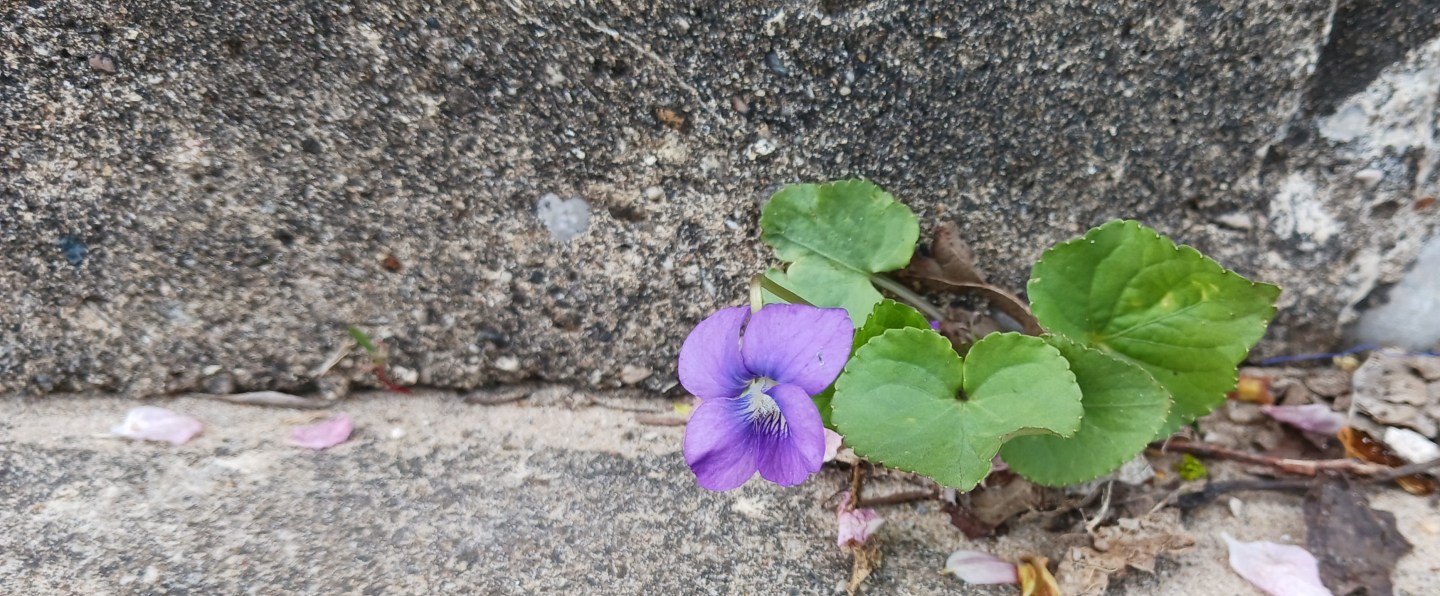
You may have heard that air plants (Tillandsia species) live on air. This is untrue. They live in air, usually clinging to trees, rocks, telephone wires, or roofs. They do not have roots. They get their water and nutrients from the air.

You may have also been told the plant magically subsists on air alone. So you set your air plant somewhere and ignore it. Eventually your plant dies

The photo is of my Tillandsia ionantha on a dinner plate. I’ve had it for ten years, and it keeps getting bigger. Here’s the secret to success:

 I’ve visited the Yucatan in Mexico where it comes from, and I saw it growing on tree branches. While I was there, I couldn’t help noticing that it rains a lot in the Yucatan in the summer. Like every day. Air plants don’t live on air, they live on thunderstorms.

The Yucatan also suffers droughts. The plant can survive a drought, but it doesn’t like them. An unending drought will kill it.

Since it doesn’t rain in my living room, I regularly spray it or dunk it in water. It has little cups in the leaves that collect water. It shouldn’t be left to sit in water, though. It lives in the air, not in a swamp.

It also lives in sunny places. An air plant belongs on a windowsill, not in a dark corner.

Here are some good tips: How to Care for your air plant - Airplantman. How to grow and care for air plants - The Spruce.

Tillandsia are great little house plants, and your service to it as a emotional support animal will be rewarded. Just don’t believe everything you’re told, especially if it sounds too good to be true. That’s one of an air plant’s gifts to you: healthy skepticism.


mount_oregano: Let me see (judgemental)

Boy Scout sailing shipThese days, hurtful language is in resurgence, including a particular word, as documented in an article from January in the New York Times, “The ‘R-Word’ Returns, Dismaying Those Who Fought to Oust It.” Even Donald Trump has used it.

The NYT article quotes Katy Neas, the chief executive of the Arc of the United States, a disability rights organization: “It’s language used by bullies to bully.”

I’m posting this excerpt from a newspaper article I wrote 45 years ago. I still remember Dawn’s words. She went to high school in Oak Creek, Wisconsin, where she was a member of the school’s Explorer Post 1841, made up of the school’s special education class.

The students were planning a trip that would include a four‑day cruise on a tall‑masted sailing ship and a day at Disneyworld. They were involved in the decision‑making from start to finish. They raised their own money and arranged to bring a small sailboat into the high school’s pool to practice swimming and sailing techniques. They studied ways to handle long days cooped up on a bus. Their teacher knew they would learn important life skills.

The trip was a success.

I interviewed the class before it left, and this is part of my report. While some of the language has changed over the years, the lesson the students taught me is still fresh.

***

“It stinks!”

That’s what it’s like to be called retarded, according to Karen Gass. “I’m just a slow learner,” she insisted.

But some of her classmates didn’t like being called slow learner, either. Special education students sounded better to them.

Normal was what Dawn Cain wanted to be called.

Karen, Dawn, and about 20 other teenagers are members of an educable mentally retarded class at Oak Creek High School. But calling someone mentally retarded is a strong label, which the students easily understand.

“I’m not retarded. Otherwise I wouldn’t be talking,” Karen said. “Do retarded people make their own jewelry? I don’t think so.”

According to the students, being retarded means being ready for a residential institution like Southern Colony in too many people’s minds. These students are able to handle their own lives. The label overstates the case for them, and they consider retarded an insult.

“We don’t call other people names,” Dawn said. “They shouldn’t have to call us names.”

“I have to take longer to learn something,” Karen added. “But we can do the same things anybody can.”

“We can’t help it we’re slow learners,” Kevin Waterstraat said.

According to the Arc of the United States, 95% of all children and adults with intellectual and developmental disabilities have only mild disabilities. They can be educated in public schools, live independently, hold a job, be self‑supporting, vote, and marry.

Some of these things are in the future for these Oak Creek students, but the pressures of growing up in a world with labels causes immediate problems.

Karen defended her preference for being called simply a slow learner rather than a member of a special class. “I don’t feel that I want to be called special. I feel I’m pretty much normal. It’s just that I learn things slower than others.”

When Kevin talks about his schooling, he talks about his courses and teachers. To him it’s just schoolwork, the same as anyone else’s.

Dawn insists that people who don’t like the fact that they have learning problems aren’t real friends anyway.

It still hurts. For this class, the issue was brought up when a newspaper article last fall told how “a group of educable mentally retarded students will spend four days sailing off the coast of Florida this spring.Y For the last eight years, part of the curriculum for the mentally retarded students has been an adventure trip in the Explorer Scout program.”

The article was factual. The class makes up Boy Scout Explorer Post 1848, and they will be taking a nine‑day trip to Florida that will include time sailing on a ship in the Florida Keys. But the students thought the article was misleading in its use of the term retarded.

For the students, the coming trip is a chance for them to prove how normal they are, as well as a chance for exploring, experimenting, and fun. They are determined to have a successful and educational trip, so they are earning and budgeting their own money and actively planning for potential problems on the trip. They draw on experiences from past trips.

“We argued sometimes about who had to do what,” Keith said.

“Yeah, but we girls did all the work anyway,” he was reminded.

The students are divided into four teams, and each team elects its own leader or has their teacher, Kathy Dermody, choose a leader. The teams will be responsible for different tasks each day, such as cooking.

On their canoe trip last year to Flambeau Flowage, they learned how to handle emergencies. Collapsed tents and wood ticks were easy. Getting lost in the woods was more scary, but each Scout wore a whistle to use to locate the rest of the troop.

But when one member came down with appendicitis, they were all tested. He braved being alone and sick far from home in a strange hospital, while his classmates remained responsible for themselves while their chaperones attended to him.

Students have benefitted from the trip in other ways. Kevin will have a job this summer as a counselor at a camp for handicapped children. “I learned things on the canoe trip I can teach these kids,” he said.

Students have plans for after graduation. One wants to work in day care. Earl Johnson hopes to be a truck driver, and Mrs. Dermody notes ruefully that he may earn more money than she does as a teacher.

The point of the trips for the students is “to see what we can do.” They’ll find out, says Mrs. Dermody, and it’s worth it.

“Some people are good at some things like reading and math,” Karen said, “and some people are good at other things, but everybody’s good at something.” She knows it might take her a little longer or require a little more effort, but she really can do the same things that other people do.


mount_oregano: Let me see (judgemental)


As you know, an emotional support animal is a companion that provides support to human individuals for a mental, psychiatric, or emotional disorder. These are often typical pet animals like dogs and cats, although other creaturesincluding plants — can improve your mental health.

Plants require a role reversal, though.

Animal companions for humans rarely get training, but you must train yourself to provide effective emotional support for plants. First, you must overcome plant blindness and see them as living beings. Then decide if you plan on supporting outdoor or indoor plants: gardening, rewilding your lawn, or sustaining indoor plants in pots?

If you already have plants, what kind do you have? Apps like Picture This and its website, Pl@ntNet, or guided observation and keys can help. Find out what that particular plant needs for warmth, light, and watering, and consider what you can offer.

Common houseplants are often jungle undergrowth plants, and your living room probably resembles a jungle floor in light and warmth — but check. Every plant has a niche, and it will suffer stress outside that niche. A cactus leads a very different life than a pothos, and small plants need more frequent care, sometimes daily, than big plants. Your first emotional support duty is to gauge your ability to minimize the plant’s stress.

“Moist” is a universally challenging concept when it involves soil, yet you must master it.

When you care for your plant, you will benefit both the plant and yourself. As you provide regular, attentive care, you may improve your own self-care. After all, you get by giving, and you learn responsibility by being responsible.

As the support animal, you will be rewarded by beauty and quiet companionship, and you will have created a supportive environment for the plant — and very possibly for yourself. Are you ready to change your life?


mount_oregano: and let me translate (translate)

Spanish poet Antonio Machado was born in Seville in 1875 and died in February 1939. His health failed while he was escaping Spain as its government fell to the Fascists at the end of its Civil War.

Spain had long been divided. Although its Civil War began in 1936, Machado named this split “the two Spains” in his book Proverbios y cantares (Proverbs and Songs), Poem LIII, in 1917, and the name stuck.

Roughly speaking, one side of the two Spains was conservative, religious, rural, and traditional; the other progressive, secular, urban, and modernist. There were also differences between regions and between people with privilege and people condemned to poverty. The split ran deep and complex.

As Machado wrote in this poem, twenty years before the brutal war began, one Spain had a death grip on its position, the other was just waking up, and the future did not look good:
 

Ya hay un español que quiere

vivir y a vivir empieza,

entre una España que muere

y otra España que bosteza.


Españolito que vienes

al mundo te guarde Dios.

Una de las dos Españas

ha de helarte el corazón.


My translation:
 

There now is a Spaniard who wishes

to live and begins to live,

amid one Spain that is dying

and another Spain that yawns.


Child of Spain, as you come

into the world, may God help you.

One of the two Spains

is going to freeze your heart.


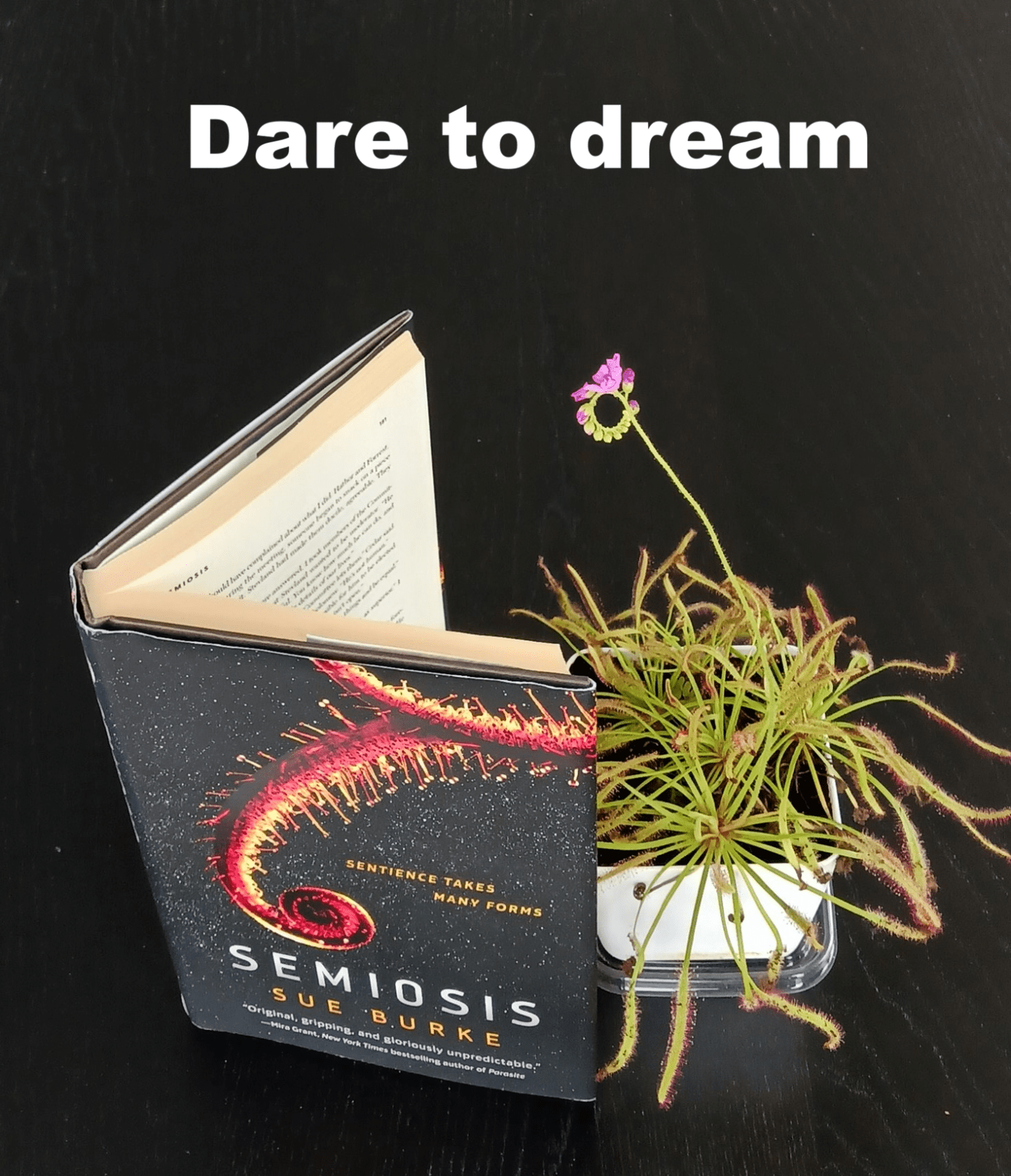
mount_oregano: novel cover art (Semiosis)


A French fan of the novel Semiosis was moved to write a suite of seven songs based on the book’s seven chapters: Pax, Les enfants de Pax, Stevland, Symbiose, Le village des verriers, Les Verriers, Semiosis.

I don’t speak French, but the music captures the energy and vibe of each chapter.

You can listen to it here: Semiosis - YouTube playlist

D’après le roman “Semiosis” de Sue Burke — Lyrics and music by BLB, vocals, all instruments by BLB except the guitar solo of Pax, by DLT.

Thank you, BLB and DLT!

mount_oregano: Let me see (judgemental)

At the Capricon science fiction convention earlier this month, I led a writing workshop.

“It’s A Start: A Workshop On Your First Paragraph — A good opening paragraph for a story or novel will carry the work to success. In this workshop, we will consider seventeen different ways to start a work of fiction, explore how each one will affect the reader, and evaluate the promise it sets for the story.”

Opening paragraphs are hard to write because so much rides on them. They should evoke the tone, voice, setting, genre, characters, stakes, conflict, trajectory, intrigue, point of view, grab attention, make readers feel they’re in skillful hands, and be interesting for the reader — or some of this, at least. Different kinds of opening paragraphs let you focus on the elements that matter to the story you want to tell.

Seventeen is a somewhat arbitrary number, but these openings offer a clue to the breadth of possibilities available. You could start with something unexpected, an image, action, simplicity, questions, curiosity, quotes, a frame, dialogue, emotion, captivation, philosophy, change, the protagonist, setting, a prologue, or flash-forward.

You can download a PDF here that explains each one and offers a couple of examples. Happy writing!


Page generated May. 1st, 2026 08:33 pm
Powered by Dreamwidth Studios